Guide
Barrel vs Cabin — Choosing Your Sauna Type
Barrel and cabin are the two archetypes most buyers weigh against each other. This guide compares them across warm-up, efficiency, capacity, layout, build and cold-climate performance so you can choose with confidence.
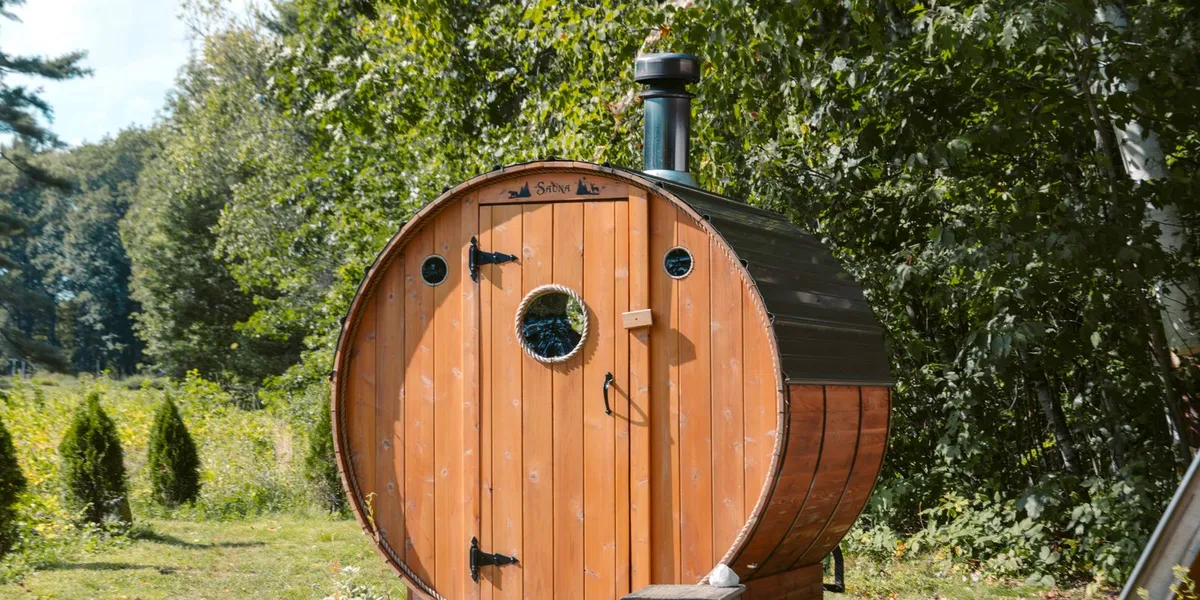
For most buyers, the outdoor-sauna decision comes down to two archetypes: the barrel and the cabin. They are the shapes people picture first, and they sit at opposite ends of several trade-offs — speed versus flexibility, simplicity versus efficiency, kit versus craft. Neither is better across the board; the right choice depends on your climate, your yard, your budget and how you like to bathe. This guide puts them side by side.
Warm-up and the shape of the heat
The barrel’s defining advantage is geometry. Its curved section reduces the volume of air above the bathers and keeps the hot interior surfaces close on every side, so it reaches temperature quickly for its size and uses relatively little material. If a fast warm-up and an efficient use of space matter most, the barrel is hard to beat.
A cabin’s boxier volume takes a little longer to warm — but a fully insulated cabin then holds that heat efficiently, which matters most in a hard winter. The barrel warms faster; the insulated cabin holds better.
Efficiency in a cold climate
This is where the two diverge most. Most barrels are only lightly insulated — their geometry and mass do much of the work — which is fine in cold and moderate conditions but less efficient in sustained extreme cold. A cabin built with a full cold-climate envelope — cavity insulation, a continuous vapour barrier and a ventilated rainscreen — holds temperature with a smaller heater and lower running costs through a Canadian winter. For the coldest regions, the insulated cabin is the more efficient long-term choice.
Capacity and layout
Both types scale to around six people, but they scale differently:
- A barrel seats two to six on facing benches, with the curved walls making shelving, backrests and a changing area awkward to fit. What you see is largely what you get.
- A cabin’s straight walls make it far more adaptable: tiered benches, a window where you want the light, and room to extend into a changing room or covered deck. If you want a two-zone building or a specific interior layout, the cabin is the flexible one.
Build difficulty and cost
For a first-time builder, the barrel is usually the friendlier project: many arrive as kits of machined cedar staves drawn together with steel bands, which a confident DIYer can assemble without advanced carpentry, and it often costs less for its capacity. See the DIY vs professional guide for where each sits.
A cabin ranges from intermediate to advanced depending on its roof and glazing, and costs more — but you are buying adaptability, efficiency and a longer design life. The trade-off is real: quicker and cheaper now, versus more capable and efficient over time.
Maintenance and longevity
Barrels need periodic maintenance as the wood moves and the steel bands settle, and their light insulation means more of the performance rides on the timber. Cabins, with their framed and clad assemblies, have more parts but also more resilience when built correctly — a well-detailed envelope and a ventilated rainscreen shrug off weather that a bare barrel simply endures.
How to choose
A quick way to decide:
- Choose a barrel if you want a fast warm-up, an approachable and lower-cost build, a compact rounded footprint, and traditional wood-fired steam — and your climate is cold or moderate rather than relentlessly extreme.
- Choose a cabin if you want maximum layout flexibility, the option of a changing room or deck, the best efficiency in deep cold, and a building you can tailor to your site — and you accept a higher cost and a more involved build.
Still torn? Put a specific barrel and a specific cabin side by side in the comparison tool and weigh their real reference figures — footprint, heater class, insulation and difficulty — against your own priorities. The archive catalogues both in depth so the decision rests on facts rather than first impressions.
Frequently asked questions
Which warms up faster, a barrel or a cabin?
A barrel, generally. Its curved section reduces the air volume above the bathers, so it reaches temperature quickly. A cabin's boxier volume takes a little longer, though a well-insulated cabin then holds heat efficiently.
Which is more efficient in extreme cold?
A fully insulated cabin. Most barrels are only lightly insulated, so in sustained extreme cold a cabin with a cold-climate envelope holds temperature more efficiently.
Which is easier to build?
Barrels are usually the more approachable, arriving as kits of machined staves. Cabins range from intermediate to advanced depending on roof and glazing, but offer far more layout flexibility.
Which holds more people?
Both scale to around six, but cabins extend more gracefully — you can add tiers, a changing room or a deck. Barrels seat two to six on facing benches, with less room to reconfigure.
Is a barrel or cabin better value?
A barrel often costs less for its capacity and is quicker to stand up, which suits a first sauna. A cabin costs more but is more adaptable and, when insulated, more efficient long-term. It is a trade-off, not a clear winner.
Added to the catalogue on . Catalogue Editorial Team at Outdoor Sauna Index.