Guide
Understanding Cold-Climate Insulation
A cold-climate sauna is an assembly, not just a heater. This guide explains the insulated envelope, the vapour barrier and the rainscreen — and why getting the moisture control right matters as much as the insulation itself.
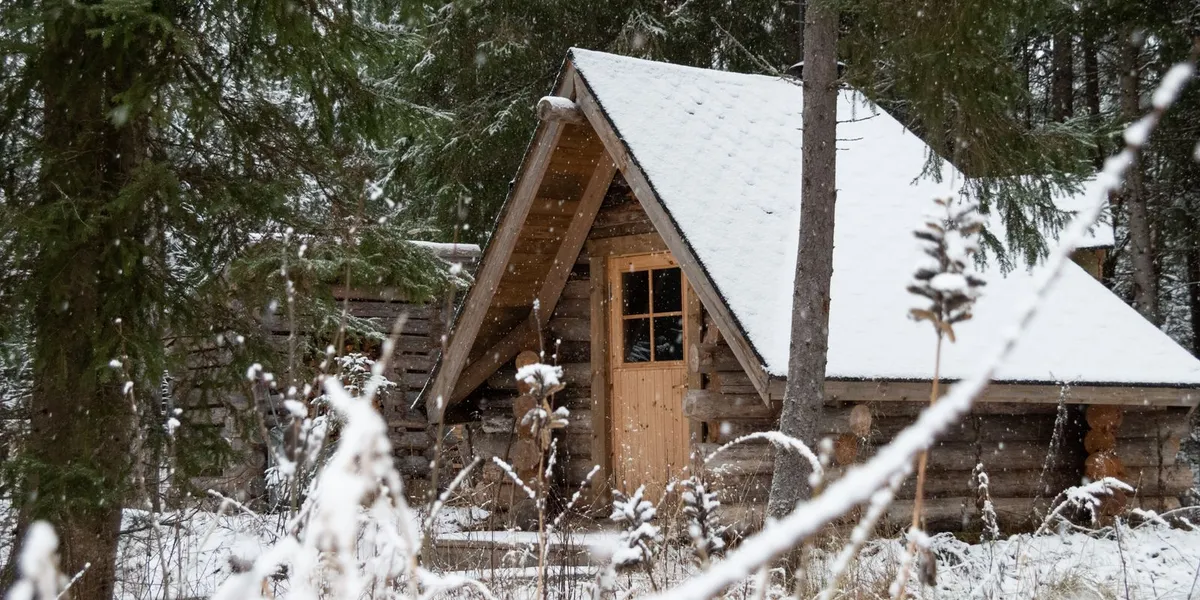
A cold-climate sauna is not a heater in a shed — it is a carefully layered assembly. The heater gets the credit, but the envelope is what lets a modest heater hold temperature through a Canadian winter without punishing running costs.
The insulated envelope
Framed cabin, cube and shed profiles carry insulation in the wall, roof and often the floor cavities. The insulation slows the heat escaping through the structure, so the room reaches temperature faster and holds it with a smaller heater. The archive grades this from uninsulated and lightly insulated (many barrels) through cold-climate insulated to high-performance (the tightest cold and extreme-cold profiles).
More insulation means quicker warm-up, lower running cost and better comfort in deep cold. The practical limit is cost and diminishing returns, not performance.
The vapour barrier: the part people get wrong
Sauna air is hot and very humid. Left alone, that moisture will drive into the walls, reach the cold outer layers, condense, and over time rot the structure and ruin the insulation. The defence is a continuous vapour barrier — usually a foil membrane — on the warm (interior) side of the insulation, with every seam, joint and penetration taped and sealed.
The single most common cold-climate mistake in the archive’s planning mistakes sections is a discontinuous or punctured vapour barrier. Continuity matters more than any other single detail: a beautifully insulated wall with a leaky barrier will still trap moisture.
The rainscreen: drying the outside
On the exterior, a ventilated rainscreen — cladding held off the structure by battens, over a breathable membrane — lets any water that gets behind the boards drain and dry rather than sitting against the wall. This matters everywhere and especially in damp and coastal settings, where the archive tags profiles for coastal moisture. Cedar and thermowood are favoured here for their stability and rot resistance.
Lifting the floor
In snow country the floor is kept clear of the ground — on screws, piers or a frost-protected slab — so snowmelt and frost cannot reach it. A sealed, drained floor then sheds rinse water and dries quickly between sessions.
The layers, in order
From inside to out, a typical cold-climate wall reads:
- Timber lining (cedar, thermowood, spruce)
- Ventilated batten cavity
- Continuous, sealed vapour barrier
- Insulated stud cavity
- Breathable exterior membrane
- Ventilated rainscreen cavity
- Exterior cladding
Get those layers and their order right and the heater’s job becomes easy. Get the vapour barrier wrong and no amount of insulation will save the wall.
Frequently asked questions
Do outdoor saunas really need insulation?
For efficient year-round use in a cold climate, yes. Uninsulated and lightly insulated saunas (like many barrels) work, but cost more to run and struggle to hold temperature in deep cold.
What is a vapour barrier and why does it matter?
It is a continuous, sealed layer (often foil) on the warm side of the insulation that stops humid interior air passing into the wall, where it would condense and cause damage. Continuity is everything.
What is a rainscreen?
A ventilated cavity behind the exterior cladding that lets any moisture drain and dry, protecting the structure — especially important in damp and coastal settings.
Can you over-insulate a sauna?
Practically, no — the limit is diminishing returns and cost. The bigger risk is a discontinuous vapour barrier, not too much insulation.
Does insulation replace ventilation?
No. A tight, insulated sauna still needs deliberate ventilation to move air, manage humidity and bathe comfortably.
Added to the catalogue on . Catalogue Editorial Team at Outdoor Sauna Index.