Guide
Planning a Lakeside or Waterfront Sauna
A waterfront sauna turns the lake into the plunge, but the shoreline brings its own rules and challenges. This guide covers the cooling cycle, setbacks, moisture, foundations and the floating option.
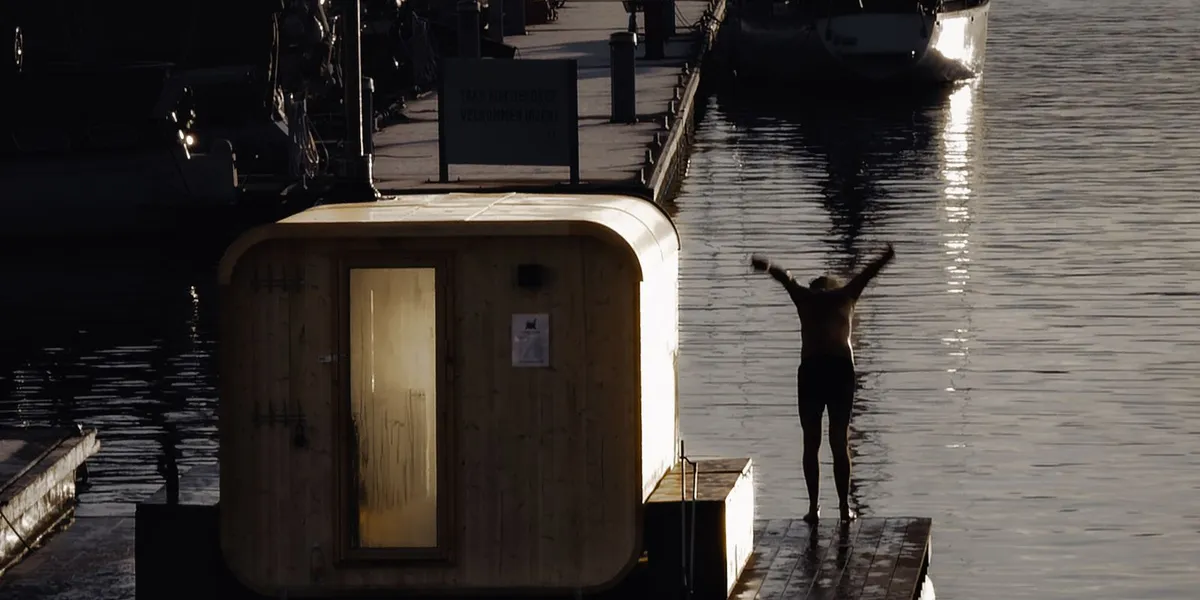
A sauna at the water’s edge is, for many people, the ideal: heat, a few steps, and a plunge into the lake. The water turns the whole hot-and-cold ritual into something elemental. But the shoreline is also a demanding place to build — it brings strict rules, constant moisture, and a set of design choices that an inland backyard never faces. This guide covers what is different about planning a lakeside or waterfront sauna.
The cooling cycle designs itself — around the water
At the shore, the cool-down needs no invention: heat the room, walk a few steps, and plunge. Lakeside profiles are built around that cycle, facing the water and pairing the hot room with a covered deck or a dock for the transition. Wood heat suits the setting and the often off-grid nature of shoreline lots, needing no power. The design job is to make the route from door to water natural, safe underfoot, and — ideally — sheltered so it works in every season.
Shoreline setbacks and environmental rules
This is the part that must come first, because it can change everything. Shoreline setbacks and environmental rules are strict and vary widely by location — they govern how close to the water you can build, what you can disturb, and sometimes the structure itself. Almost always this means the sauna is set back from the very edge and lifted on a foundation, rather than perched on the waterline. Confirm the rules with your local authority before you site anything near water; the siting guide and the permits guide cover the process.
Moisture: the constant challenge
Waterside air is humid — and, on some coasts, salty — which attacks the parts of a sauna that mishandle water. Waterfront detailing leans hard on drying:
- Moisture-tolerant, rot-resistant timbers such as cedar and thermowood, inside and out.
- A ventilated rainscreen so the walls drain and breathe — see getting insulation and the vapour barrier right.
- A sealed, well-drained floor that clears rinse and plunge water fast, with greywater led away from the structure.
The principle is the same as everywhere — keep water moving and the structure dry — but the margins are tighter by the water. The coastal-climate profiles are drawn for exactly this.
Foundations near the shore
A lakeside foundation must keep the structure level and clear of damp ground, and stay stable on what can be soft, sloping or seasonally wet terrain near the water. Concrete piers or ground screws, set back from the water on stable ground, are common choices. Frost, drainage and the specific soils all bear on the decision; the foundations reference compares the options.
The floating option
For the boldest waterfront saunas, the building itself goes on the water. A floating sauna sits on a pontoon or raft, putting the plunge right at the door. Nothing else offers that immediacy — but it is a specialist marine build, governed by buoyancy, stability, mooring and waterway rules, with constant moisture exposure and harder access for servicing. For the right site with mooring rights, it is unmatched; for most owners, a shoreline sauna set back from the water is the simpler and more practical route.
Bringing it together
A great lakeside sauna is a sequence of sensible decisions in the right order: confirm the rules first; site it set back and sheltered with a clear route to the water; found it on a stable, lifted base; detail the envelope for constant moisture; and choose wood heat if the lot is off-grid. Do that, and the water does the rest — turning the sauna into the elemental, invigorating ritual that makes people dream of a sauna by the lake in the first place.
Frequently asked questions
Can I build a sauna right at the water's edge?
Shoreline setbacks and environmental rules are strict and vary widely by location, so usually the sauna is set back and lifted rather than at the very edge. Always confirm the rules with your local authority before siting anything near water.
What makes lakeside saunas different to build?
The cooling cycle uses the water itself, so the design faces the shore; and constant humidity means moisture-tolerant timbers, a ventilated rainscreen and good drainage matter more than on a dry inland lot.
Is a wood or electric heater better for a lakeside sauna?
Wood suits the setting and the frequently off-grid nature of shoreline lots, needing no power. Electric works where a supply is available. Many waterfront profiles are wood-fired for that independence.
What is a floating sauna?
A sauna built on a pontoon or raft so the water is steps from the door. It makes the lake the plunge but is a specialist marine build governed by buoyancy, stability, mooring and waterway rules.
What foundation suits a lakeside sauna?
One that keeps the structure level and clear of damp ground near the shore — commonly concrete piers or ground screws, set back from the water on stable ground.
Added to the catalogue on . Catalogue Editorial Team at Outdoor Sauna Index.