Guide
Protecting Sauna Timber from Rot and Weather
Rot is the slow enemy of an outdoor sauna. This guide explains how to protect the timber — outside with a rainscreen, drainage and overhangs, inside with drying and untreated wood — and what to check each year.
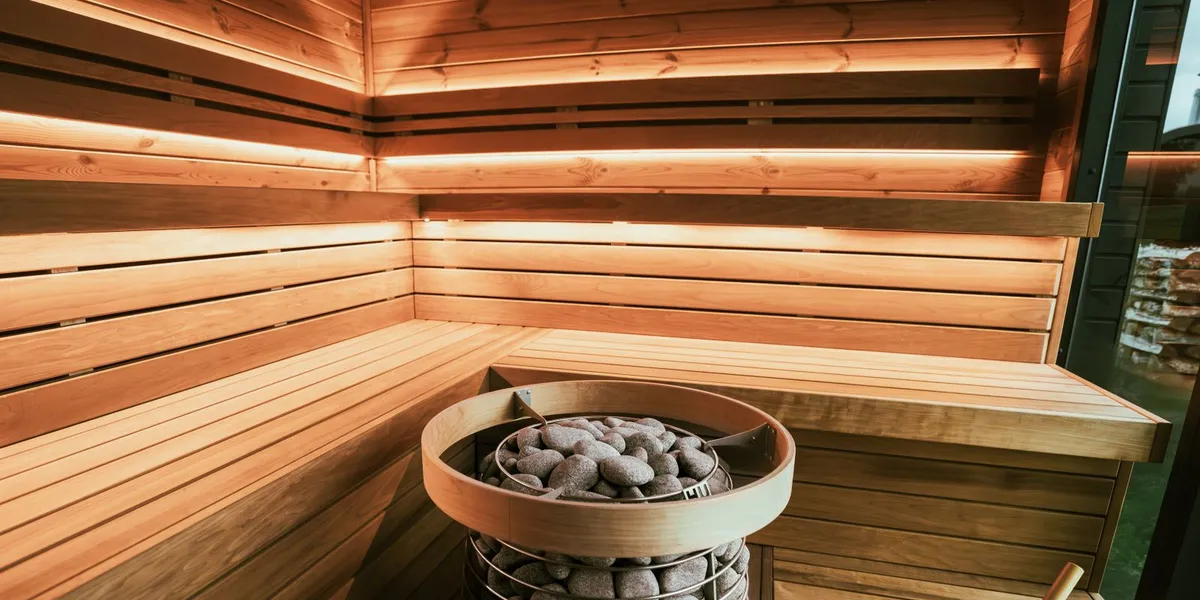
An outdoor sauna lives a hard life: hot and humid inside, cold and wet outside, through freeze after thaw. Left to chance, that combination invites rot — the slow, often invisible enemy that shortens a poorly built sauna’s life. The good news is that protecting the timber is almost entirely about one idea: keep water moving and the wood able to dry. Get that right, inside and out, and a sauna lasts for decades. This guide covers how.
Rot needs trapped moisture — deny it
Wood does not rot from being wet occasionally; it rots from staying damp. Every defence in this guide serves the same goal: never let water sit against the timber long enough to feed decay. Denying rot that trapped moisture — outside, inside and underneath — is the whole strategy.
Outside: rainscreen, drainage and overhangs
The exterior faces the weather, and three details keep it sound:
- A ventilated rainscreen. Cladding held off the structure by battens, over a breathable membrane, lets any water that gets behind the boards drain and dry rather than sitting against the wall. This is the single most important exterior detail — more than any surface coating — and the insulation and vapour-barrier guide covers it in full.
- Drainage and grading. The ground should slope so surface water and snowmelt run away from the sauna, never pooling against the base or the foundation.
- Generous overhangs. The roof’s overhangs push shed snow and rain clear of the walls and door — protection that matters everywhere and doubly in a wet freeze-thaw climate.
Stable, rot-resistant timbers help too: cedar and thermowood are favoured cladding for good reason.
Inside: dry it out, leave it bare
The interior faces heat and humidity, and the rules flip:
- Dry the room after use. Leave the vents open and, if you can, the door ajar so the room dries fully between sessions. This single habit prevents most long-term interior damage.
- Leave interior timber untreated. Coatings trap moisture and get hot and sticky; rely on the timber’s natural properties instead, as the interior wood guide explains.
- Keep the vapour barrier intact. A continuous, sealed barrier on the warm side stops humid room air from condensing inside the wall — the hidden route to rot.
Underneath: a lifted, drained floor
The base is the third front. A lifted, frost-stable foundation — screws, piers or a frost-protected slab — keeps the floor clear of the ground and of snowmelt, with air beneath it to help it dry. A sealed, sloped floor draining to a point clears rinse and löyly water fast. Together they keep moisture from reaching the structure from below.
Exterior finish: weather or oil, your choice
On the cladding, you have a genuine choice. Cedar and thermowood can be left to weather to a silver-grey, or oiled to hold their tone — both are valid, and it is an aesthetic decision, not a structural one. What protects the wall is the rainscreen and the drainage behind and around the cladding, not the surface finish. If you do oil, re-coat periodically per the product.
Seasonal checks catch trouble early
Rot is easiest to stop when it is small, so build a seasonal habit:
- Autumn: clear leaves from the roof and base, check drainage and seals before winter, service the heater or stove.
- Winter: keep snow off a flat or low roof if it approaches its load, keep the entry and vents clear.
- Spring: a full clean inside and out, and a look for any moisture that got in over winter.
- Summer: sand benches, clean glazing, and check the cladding and rainscreen cavity.
The one-line version
Protecting sauna timber comes down to moisture management plus a few annual checks. Keep water moving and away outside, keep the room drying inside, keep the floor lifted and drained below — and look it over each season. Do that, and the weather that wears out a neglected sauna simply passes a well-built one by.
Frequently asked questions
How do I stop an outdoor sauna from rotting?
Keep water moving and the timber able to dry — a ventilated rainscreen and overhangs outside, a lifted and drained floor, and a room that dries fully after use. Rot needs trapped moisture, so denying it that is the whole strategy.
Should I treat or seal the sauna wood?
Leave interior timber untreated; coatings trap moisture and get hot. Exterior cladding may be left to weather or lightly oiled, but the ventilated rainscreen behind it matters more than any surface coating.
What is the biggest cause of sauna timber damage?
Trapped moisture. A missing rainscreen, a punctured vapour barrier, poor drainage or a room that never dries out are the usual culprits, and they often do their damage invisibly.
How often should I check the sauna for weather damage?
A seasonal habit works well — a clean and inspection in spring, checks before winter, and a look at seals, drainage and cladding through the year. Catching a small problem early prevents a large repair.
Does the foundation affect rot?
Yes. A lifted, frost-stable, well-drained foundation keeps the floor clear of the ground and snowmelt, which is a first line of defence against moisture reaching the structure from below.
Added to the catalogue on . Catalogue Editorial Team at Outdoor Sauna Index.