Guide
Interior Wood — Cladding, Lining and Benches
A material perfect for cladding can be wrong for a bench. This guide matches sauna timbers to their three roles — exterior, lining and benches — and explains why resin, heat and moisture decide the fit.
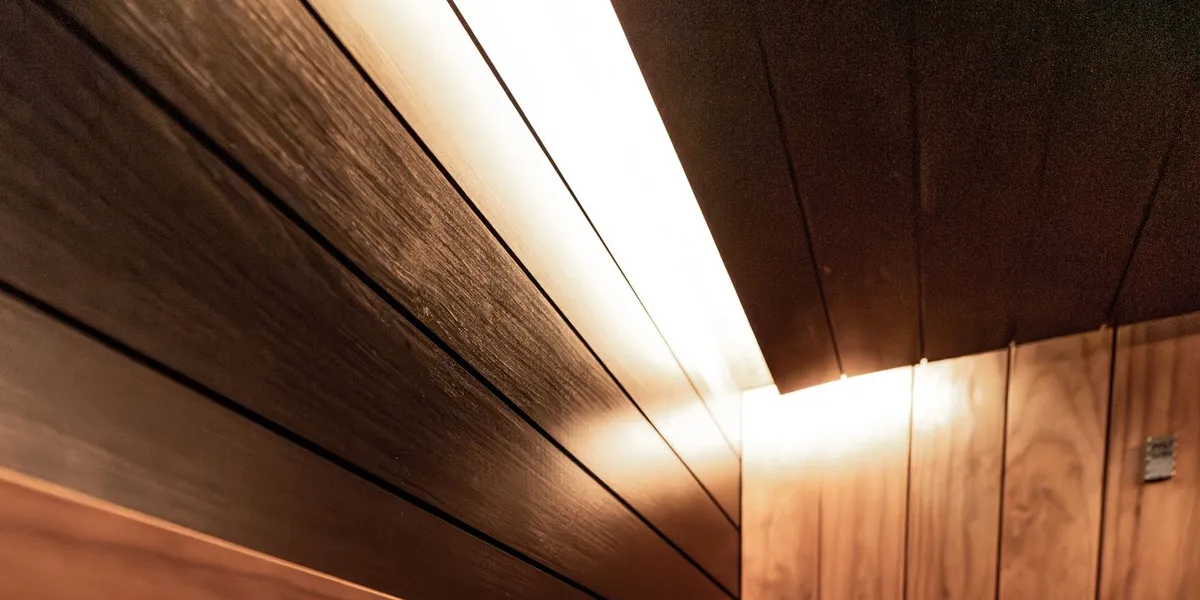
An outdoor sauna asks three different things of its timber. The exterior cladding has to survive weather, sun and freeze-thaw. The interior lining has to stay stable and calm at high heat and humidity. And the benches — the surfaces you actually sit and lie on — have to stay cool and resin-free against bare skin. A wood that excels in one of these roles can be wrong in another, which is why the smart approach is to choose timber by role, not by picking a single favourite for the whole build.
The three roles
Think of the sauna’s wood as three jobs:
- Exterior cladding — the weather skin, over a ventilated rainscreen.
- Interior lining — the visible, aromatic surface of the hot room.
- Benches and backrests — the contact surfaces, where comfort rules.
Match a timber to each and the sauna both performs and feels right.
Cladding: stability and rot resistance
Outside, you want a timber that is dimensionally stable and rot-resistant. Cedar — both western red and eastern white — is the classic premium choice, weathering gracefully to silver-grey or holding its tone with oil. Thermowood is prized for exceptional stability and its affinity for modern dark and charred finishes. Economical spruce works on budget and off-grid builds with good protection, while black metal cladding gives a durable, contemporary exterior. Whatever you choose, the rainscreen behind it does half the work by letting the wall drain and dry.
Lining: stable, low-resin, comfortable
Inside the hot room, the lining should be stable, low in resin and comfortable at temperature. Western red cedar is the benchmark — low-resin, aromatic and forgiving. Thermowood gives a stable, contemporary look. Hemlock offers a clean, knot-light, economical lining. The lining sets the room’s look and aroma, so it is as much an aesthetic choice as a technical one — within the bounds of what behaves well in heat.
Benches: cool and resin-free above all
The benches are where the rules are strictest, because your skin is on them. Choose resin-free, low-density timbers that stay cool to the touch: aspen and alder are the standards, smooth and splinter- resistant, with clear cedar also popular. Avoid resinous woods — notably pine — for benches, where hot sap can weep and the surface can get uncomfortably hot. A cool, resin-free bench in the right timber is quietly the difference between a sauna you tolerate and one you never want to leave; see the bench-layout guide for the geometry.
Leave it untreated
One rule spans all interior timber: do not varnish or seal it. Coatings trap moisture and get hot and sticky in use. Rely on the timber’s natural properties and on good ventilation instead, and keep surfaces clean with water. Benches can be lightly sanded over the years to refresh them. Exterior cladding is the exception — it may be left to weather or oiled, as you prefer.
Mixing timbers by role
The best saunas often use more than one timber: a stable cladding outside, a warm low-resin lining, and cool resin-free benches — for example a cedar or thermowood exterior, a cedar or hemlock lining, and aspen benches. The archive’s profiles list the exterior, interior and bench material separately for exactly this reason, and the materials reference sets out each timber’s thermal behaviour, resin level and suitability. Choose by role, leave the inside untreated, and let each wood do the job it is best at.
Frequently asked questions
What is the best wood for sauna benches?
Resin-free, low-density timbers that stay cool against the skin — aspen and alder are the usual choices, with clear cedar also popular. Avoid resinous woods like pine for benches, where hot sap can weep.
Should sauna wood be sealed or oiled inside?
No. Leave interior sauna timber untreated. Coatings trap moisture and get uncomfortably hot; the timber's natural properties and good ventilation keep it healthy.
What is the best exterior cladding for a cold climate?
Cedar and thermowood are favourites for their stability and rot resistance over a ventilated rainscreen. The cladding protects the structure and can be left to weather or lightly oiled.
Why not use pine inside a sauna?
Pine is economical and warm-looking but high in resin, which can weep at heat and makes it unsuitable for benches and hot-zone linings. It suits framing and, in solid stacked form, log walls.
Does the interior wood affect the experience?
Yes — the lining sets the look and aroma, and the benches decide comfort against the skin. Cool, resin-free benches and a stable, low-resin lining make a noticeable difference to how a sauna feels.
Added to the catalogue on . Catalogue Editorial Team at Outdoor Sauna Index.