Guide
Bench Layout and Ergonomics
The benches decide how a sauna feels to sit in and how many it holds. This guide covers tier height, depth, layout options and the relationship between the upper bench, the stones and the ceiling.
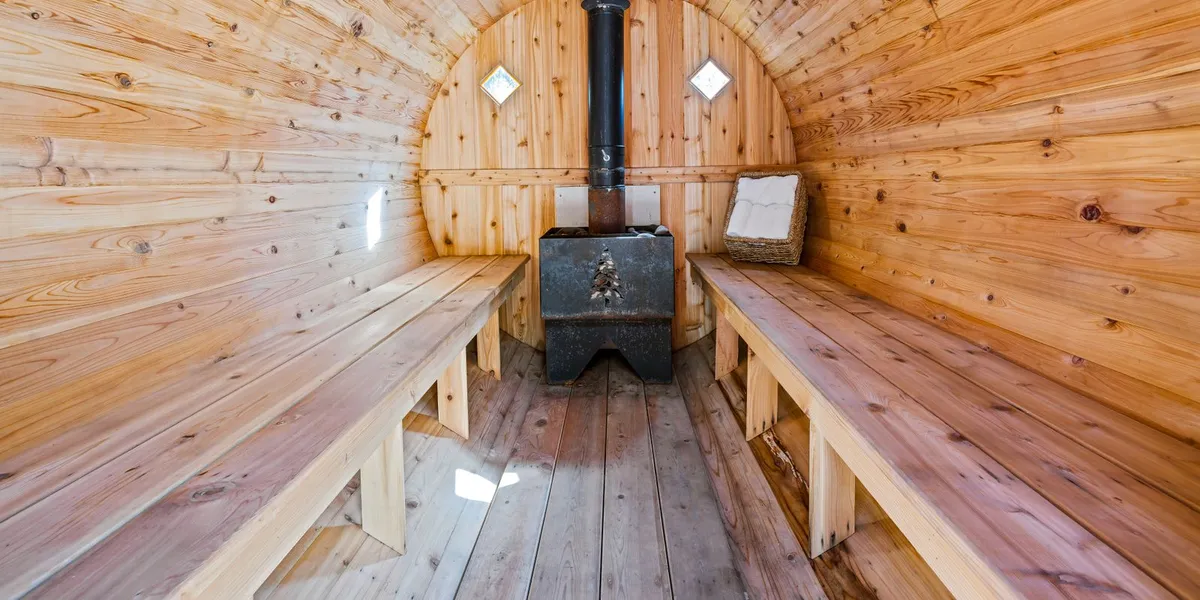
You experience a sauna sitting down, so the benches are the interface between you and the room. Their height, depth and layout decide how comfortable it feels, how good the heat is, and how many people it really holds.
Heat rises — so the upper bench rules
The single most important fact of bench design is that heat gathers near the ceiling. The upper bench is therefore the prime seat — the hotter, better bathing position — while the lower bench is cooler, doubles as a footrest for those above, and suits anyone who prefers gentler heat or is cooling down.
This is why capacity is really about upper-tier length: a room’s headline number depends on how many can sit in the good heat at once.
The löyly relationship
Comfort depends on the relationship between the upper bench, the stones and the ceiling. Ideally the bather on the top bench sits with the heat gathering just above, and the stones positioned so the steam reaches them well. A ceiling that is too high wastes heat in a void above the bathers; benches set too low leave people sitting in cooler air. Getting these heights into a sensible relationship is what makes a room bathe well, regardless of its heater.
Depth, and room to lie down
A bench must be deep enough to sit comfortably, and — on the top tier — ideally deep and long enough to lie down. A reclining bather needs roughly the length of their body and enough depth to feel stable. If you like to recline, design for it from the start; it changes the useful capacity of the room.
Layout options
- Single bench run — one wall of seating; simple, suits compact rooms.
- L-bench — an L along two walls; flexible for one to four.
- Facing benches — runs along both long walls; the sociable choice for four to six, and the archive’s default for larger rooms.
- Two tiers — upper and lower, giving hot and cool seats plus a footrest.
Materials and finish
Use resin-free, cool-to-touch bench timbers — aspen, alder or clear cedar — and leave them untreated. Coatings get hot and sticky and trap moisture. Keep benches clean with water, let them dry, and sand them smooth every few years. A well-designed bench in the right timber is quietly the difference between a sauna you tolerate and one you never want to leave.
Frequently asked questions
How high should the upper bench be?
High enough to sit in the best heat, which gathers near the ceiling — commonly the upper bench sits well above the lower one, with the feet resting on the lower tier. Exact heights follow the room and the heater.
How deep should a bench be?
Deep enough to sit comfortably, and ideally to lie down on the top tier — a reclining bather needs a bench roughly the length of their body and enough depth to be stable.
One tier or two?
Two tiers give a hotter upper seat and a cooler lower one (and a footrest), suiting most saunas. A single tier can work in very small rooms.
Why does the upper bench matter most?
Because heat rises, the upper bench is where the best bathing heat is, so usable capacity is really about upper-tier length.
Should benches be sealed or oiled?
No — leave bench timber (aspen, alder, cedar) untreated so it stays cool and does not get hot or sticky. Clean with water and let it dry.
Added to the catalogue on . Catalogue Editorial Team at Outdoor Sauna Index.