Guide
How Long an Outdoor Sauna Takes to Heat
Warm-up time is one of the first questions people ask. This guide explains what drives it — heater power, room size, insulation, heat source and outdoor cold — and how to design for a shorter wait.
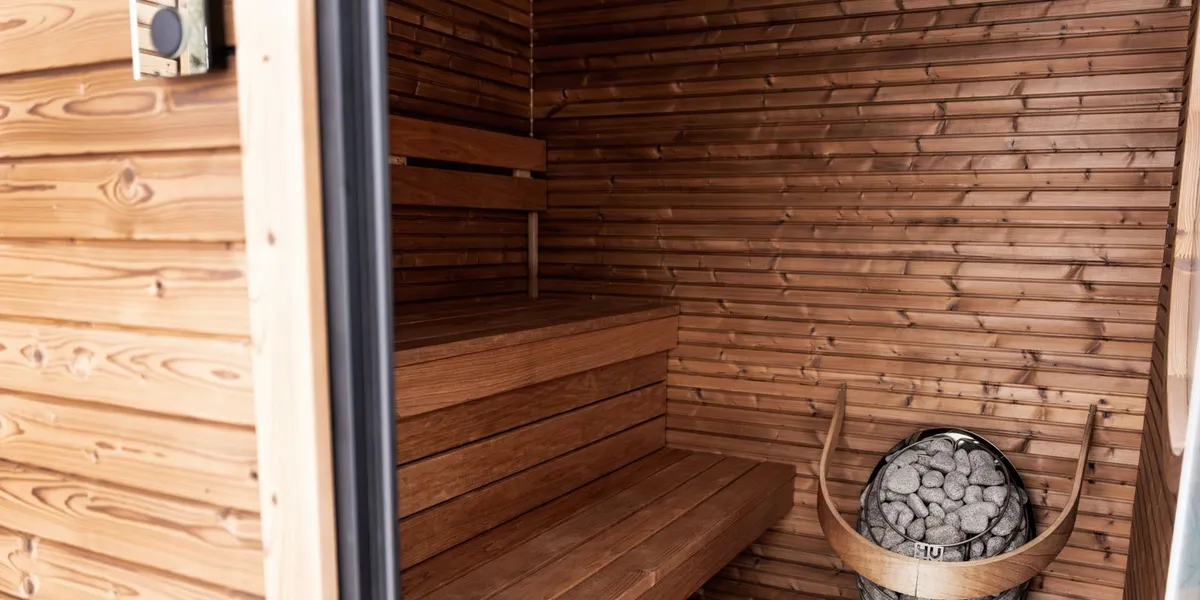
“How long until it’s ready?” is one of the first questions anyone asks about an outdoor sauna, and it is a fair one — in a cold climate, warm-up time is part of the experience. The honest answer is that it depends, and this guide explains what it depends on. Once you understand the factors, you can both set realistic expectations for a given sauna and design a new one to shorten the wait.
There is no single number
The archive deliberately avoids quoting a fixed warm-up time for each profile, because the real figure is a product of several variables working together — the heater, the room, the envelope, the heat source and the weather. A number that is true for a small insulated cabin in mild autumn is wrong for a large glazed room in deep winter. Rather than a false precision, it is more useful to understand the levers.
Heater power versus room volume
The single biggest factor is the match between heater output and room volume. A heater sized correctly for the space warms it briskly; one that is undersized struggles, taking far longer and sometimes never reaching a satisfying heat in the cold. This is exactly the pairing the heater sizing guide is about — get the output right for the cubic volume, with an allowance for cold-climate losses, and warm-up time falls into a sensible range.
Insulation holds what the heater makes
A heater only has to overcome the heat the room loses. A well-built insulated envelope with a continuous vapour barrier loses far less to the outside cold, so the same heater brings the room up faster and holds it there with less power. A poorly insulated or barrier-less room fights the cold the whole time. In a cold climate, insulation is not just about efficiency in use — it directly shortens the wait.
Wood versus electric: different curves
The heat source shapes how the room warms:
- A wood stove is a gradual build — establish the fire, let it settle, bring the stones up. It rewards patience, and tending it is part of the ritual for many people.
- An electric heater can be more immediate and, on a timer or controller, ready the room before you arrive.
Neither is “faster” in an absolute sense — both reach full heat — but electric with a timer removes the wait from your experience, while wood makes the warm-up part of it.
Glazing and the outdoor cold
Two more factors pull the time up:
- Glazing. Large glass areas lose more heat than an insulated wall, so a heavily glazed room warms more slowly and needs the heater sized with that in mind. It is a trade worth making for the view and light — just plan for it.
- Outdoor temperature. The colder it is outside, the more the room loses as it warms. The same sauna is quicker in mild autumn than in a deep freeze — which is precisely why cold-climate design leans on heater sizing and insulation.
Designing for a shorter wait
If a quick warm-up matters to you, the design choices are clear: size the heater generously for the volume and the cold; insulate the envelope properly with a sealed vapour barrier; keep glazing purposeful rather than sprawling; and, for electric, fit a timer so the room is ready when you are. A compact, well-insulated two-person cabin with a right-sized heater is about as quick as an outdoor sauna gets; a large, glazed, wood-fired room is a slower, more ceremonial affair by nature.
The takeaway
Warm-up time is a design outcome, not a fixed property. Match the heater to the room, insulate for the climate, keep the glass purposeful, and choose the heat source that suits how you want to use the sauna — immediate electric or ceremonial wood. Do that, and the wait becomes whatever you designed it to be, rather than a frustration you discover after the build.
Frequently asked questions
How long does an outdoor sauna take to heat up?
It varies widely with heater power, room size, insulation and outdoor temperature. A well-insulated room with a correctly sized heater warms far faster than an under-heated or under-insulated one. There is no single number — this guide explains the factors so you can judge your own build.
Does a wood sauna take longer to heat than electric?
A wood stove needs time to establish the fire and bring the stones up, so it is typically a slower, more gradual warm-up. An electric heater on a timer can be more immediate. Both reach full heat; they differ in how they get there.
Why does my outdoor sauna heat slowly?
The usual causes are an undersized heater for the room, weak insulation or a missing vapour barrier, large areas of glazing, or severe outdoor cold. Fixing the heater-to-room match and the envelope makes the biggest difference.
Does insulation really change warm-up time?
Yes, substantially. A properly insulated envelope with a continuous vapour barrier holds the heat the heater produces instead of losing it to the cold, so the room reaches temperature faster and holds it with less power.
How does outdoor cold affect heating time?
The colder it is outside, the more heat the room loses as it warms, so a deep-winter session takes longer than a mild-autumn one in the same sauna. This is exactly why cold-climate saunas prioritise heater sizing and insulation.
Added to the catalogue on . Catalogue Editorial Team at Outdoor Sauna Index.