Guide
Chimneys and Clearances for Wood-Burning Saunas
Wood heat is wonderful and demanding. This guide covers the fire-safety fundamentals of a wood-burning sauna — hearth, clearances, chimney and fuel — and why the stove installation belongs to a professional.
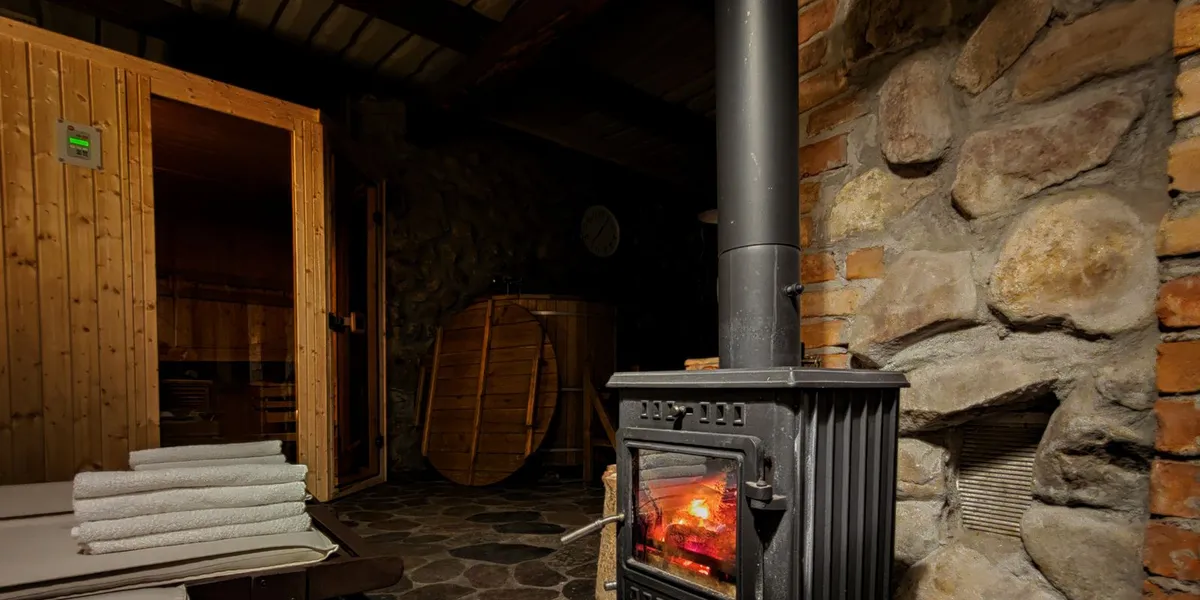
A wood-fired sauna offers something electric cannot — a deep, traditional steam and complete independence from the grid — but it asks for respect for fire safety in return. Where an electric sauna’s critical work is the circuit, a wood sauna’s is the stove installation: the hearth, the clearances, the chimney and its roof penetration. Get these right and a wood sauna is a self-reliant pleasure; get them wrong and the consequences are serious. This is the part of the build that belongs to a qualified professional, following the stove manufacturer and your local fire code.
The non-combustible hearth
A wood stove sits on and against a non-combustible hearth — a protective base and surround of stone, concrete or tile that shields the timber structure from the fire’s heat and from any embers. The hearth must be sized to the stove manufacturer’s requirements, extending far enough beneath and in front of the stove. In a small, timber-lined room this protection is not optional detailing — it is the barrier between the fire and a combustible building.
Clearances to combustibles
Every wood stove has a required clearance to combustibles — a minimum distance from the stove and flue to any burnable material, including the timber walls and benches. That distance is set by the manufacturer and local fire code, and it varies by stove and by whether heat shielding is used. There is no safe rule of thumb here; the figure comes from the documentation. Planning the interior layout around these clearances from the start avoids awkward compromises later, and it is one reason the bench layout and the stove position are decided together.
The chimney and roof penetration
The chimney is where many of the risks concentrate:
- An insulated chimney section keeps the hot flue from radiating dangerous heat into the surrounding structure.
- The roof penetration must be detailed to keep the hot flue away from combustible framing, and to stay weather-tight against rain and snow.
- The chimney must route and terminate correctly — high enough and positioned so it draws well and sheds smoke clear of the building and the door.
This combination of fire safety and weatherproofing is exactly why the chimney is professional work, not a DIY afterthought. On a mobile sauna it is more demanding still, because the chimney must also be secured for travel.
Fuel storage and ash
Wood heat brings the practical realities of fuel:
- Store seasoned, dry firewood under cover, a sensible distance from the stove and flue, and keep kindling clear of the hearth and hot surfaces.
- Manage ash regularly, removing it into a metal container — never a combustible one — and disposing of it safely once cold.
- Clean the chimney periodically to prevent build-up, and check the hearth and clearances as part of routine maintenance.
Ventilation works with the stove
A wood stove draws combustion air and drives airflow through the room, so the ventilation is designed around it — typically a low inlet near the stove and an adjustable high outlet. Getting the stove-and-vent balance right is what makes a wood sauna both safe to breathe and pleasant to bathe in, especially in the archive’s off-grid profiles with passive, powerless ventilation.
Build the structure, hire the fire
The sensible division of labour for many owners is a hybrid: build the sauna’s structure yourself for the satisfaction and the saving — see the DIY vs professional guide — and bring in a qualified professional for the stove, hearth, clearances and chimney. And as with every profile in the archive, confirm the installation against the stove manufacturer’s instructions and your local fire-code requirements before the first fire. Wood heat rewards that care with a sauna that is both self-reliant and safe.
Frequently asked questions
Can I install a sauna wood stove myself?
The structure around it may be a DIY build, but the stove, hearth, clearances and chimney are life-safety details that should follow the stove manufacturer and local fire code, and are best installed by a qualified professional.
What is a non-combustible hearth?
A protective base and surround of non-combustible material — such as stone, concrete or tile — beneath and around the stove, sized to the manufacturer's requirements, that protects the timber structure from the fire's heat and any embers.
How far must a sauna stove be from the walls?
A specific clearance to combustibles set by the stove manufacturer and local fire code. It varies by stove and by whether shielding is used, so follow the documentation rather than a rule of thumb.
How does the chimney pass through the roof safely?
Through an insulated chimney section and a properly detailed, code-compliant roof penetration that keeps the hot flue away from combustible framing and stays weather-tight. This is a critical detail to get right.
Where should I store firewood?
Under cover and a sensible distance from the stove and flue, dry and seasoned. Keep fuel and kindling clear of the hearth and any hot surfaces.
Added to the catalogue on . Catalogue Editorial Team at Outdoor Sauna Index.