Guide
Water Supply and Drainage
Water is the quiet enemy of an outdoor sauna. This guide covers rinse and shower supply, the sealed drained floor, and moving greywater and runoff safely away from the building.
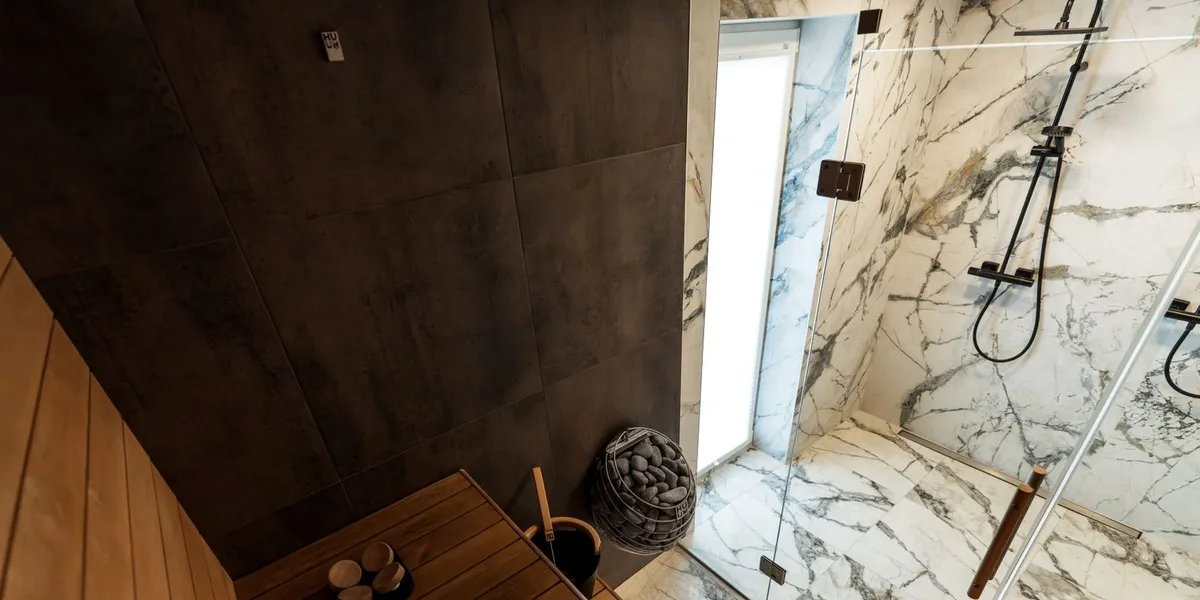
Heat gets the attention, but water is what quietly damages an outdoor sauna if it is not managed. The good news is that the essentials are simple: get water in where you need it, and get it out — and away — everywhere else.
Water in: how much do you need?
An outdoor sauna needs surprisingly little plumbing:
- The minimum is a bucket and ladle for löyly, refilled from a hose, tap or the lake. Many traditional saunas work exactly this way, which also sidesteps freezing pipes in winter.
- A rinse shower — indoor or outdoor — is the common comfort upgrade, letting bathers rinse before and cool after. Several archive profiles include an outdoor shower for the cool-down cycle.
- Full plumbing with hot water is a luxury-tier addition and brings the complexity of supply, protection from freezing, and greywater handling.
In a cold climate, any plumbed line must be protected from freezing — drained down, heat-traced or routed to avoid it — or kept to summer use.
The sealed, drained floor
Inside the hot room, the archive’s standard detail is a sealed floor, sloped to a single drain. This clears rinse and löyly water fast and — just as important — lets the room dry quickly between sessions, which is the single best defence against long-term moisture damage. Tiled or sealed wet-zone floors suit showers and drained areas.
Water out: greywater and runoff
Two kinds of water must be led away from the structure:
- Greywater from the floor drain and any shower, to a soakaway or drainage point appropriate for your site and local rules — never left to pool under the sauna, where it feeds frost heave and rot.
- Surface runoff and snowmelt, managed by grading the ground so it slopes away, generous roof overhangs, and a ventilated rainscreen that lets the walls drain and dry.
The principle: keep water moving
Every water detail in the archive follows one principle — keep water moving and keep the structure dry. In, used, out, and away, with nothing pooling against the timber or the foundation. Confirm greywater disposal and any plumbing against your local requirements, and in cold country design every line and drain to survive the freeze.
Frequently asked questions
Does an outdoor sauna need plumbed water?
Not necessarily. Many work with just a bucket and ladle inside and a nearby hose or lake for rinsing. A plumbed rinse shower is a comfort upgrade, not a requirement.
Why does the floor need a drain?
To clear rinse and löyly water quickly and let the room dry between sessions. A sealed, sloped floor draining to one point is the archive’s standard detail.
Where should greywater go?
Away from the structure and its foundation, to a soakaway or drainage point that suits your site and local rules — never pooling under the sauna.
Can I use a sauna in winter without plumbing?
Yes — a bucket inside and a lake or snow outside is a traditional, freeze-proof approach. Plumbed lines in a cold climate need protection from freezing.
How do I stop water damaging the sauna?
Keep it moving: a sloped sealed floor, a working drain, a ventilated rainscreen outside, and grading that sends runoff away from the base.
Added to the catalogue on . Catalogue Editorial Team at Outdoor Sauna Index.