Guide
Sauna Lighting and Off-Grid Power
Sauna lighting must tolerate heat and moisture and stay glare-free. This guide covers fixture placement, safe wiring, and running lights and controls off-grid with solar or battery power.
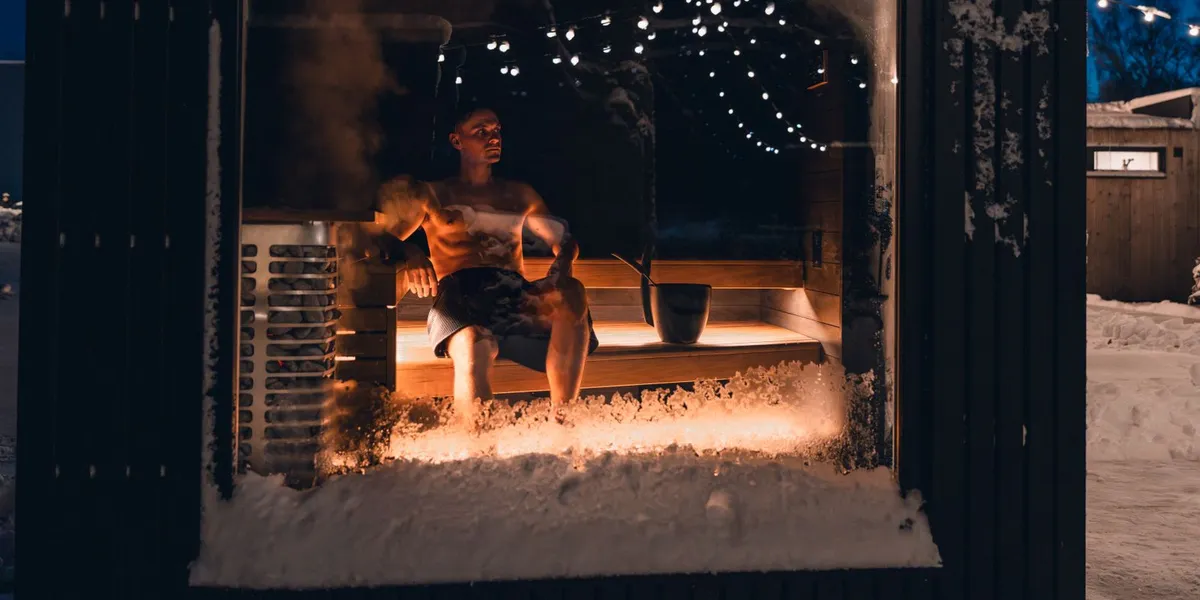
Good lighting turns a sauna from a dim box into a calm, inviting space — but the environment is unforgiving: hot, humid, and lined with timber. Lighting must be chosen and placed with that in mind, and it can run entirely off-grid.
The lighting challenge
A sauna is one of the harsher environments in a home: high heat near the ceiling, constant humidity, and splashes of water. Fittings must be rated for heat and moisture, and wiring must be protected and installed to code. Any mains electrical work belongs to a qualified electrician, following the fixture manufacturer’s ratings and local requirements.
Placement: low and indirect
The goal is soft, glare-free light. Bathers lie back and look up, so a bright fitting overhead is dazzling and sits in the hottest air. Instead, place lighting:
- low, near the floor or under a bench,
- behind a backrest or a timber baffle, so the source is hidden and the light washes the wall, or
- around a door or window reveal for a gentle glow.
Warm, dimmable, low-glare LED is the usual choice — efficient, cool-running and long-lived.
Off-grid power
One of the quiet advantages of a sauna is that the heat and the electricity are separate problems. A wood stove needs no power at all, so lighting and any controls can run off-grid:
- a small solar panel and a battery can power low-voltage LED lighting indefinitely at a remote site,
- a rechargeable battery or a portable power station works where solar is impractical, and
- simple battery lanterns need no wiring at all.
The archive’s solar-ready off-grid profile is drawn around exactly this idea: wood heat, with a mono-pitch roof oriented to carry panels for the small electrical loads. Crucially, solar sizing is about lighting and controls, not heating — do not confuse the two.
Controls
If an electric heater is used, its controller — a wall panel or a remote/app timer — is the main electrical control. Site it outside the hottest zone per the manufacturer, and let it handle pre-heating. Off-grid, wood-fired saunas need no controller; the stove is managed by hand.
Keep it simple and safe
Resist the urge to over-light. A sauna wants atmosphere, not brightness — one or two soft, well-placed sources are usually enough. Avoid open flames in a small timber room, keep every fitting rated for the conditions, and leave mains wiring to a professional. Done simply and safely, lighting is one of the cheapest ways to make a sauna feel finished.
Frequently asked questions
What kind of lighting suits a sauna?
Low-glare, moisture- and heat-rated fixtures, placed low or behind a backrest so the light is soft and indirect. Any electrical work must follow the manufacturer’s ratings and local code, done by a qualified electrician.
Can I light an off-grid sauna?
Yes — a small solar panel and battery, or a rechargeable battery lantern, can run low-voltage LED lighting without any mains connection. The wood stove still provides the heat.
Where should sauna lights go?
Low and indirect — often under a bench or behind a backrest — so bathers are not dazzled and the fitting is away from the hottest air near the ceiling.
Are candles or open flames safe in a sauna?
Open flames are best avoided in a small, timber-lined room. Stick to sealed, heat- and moisture-rated electric or battery lighting.
Does lighting affect the heater sizing?
No — lighting is a tiny electrical load compared with the heater, and off-grid lighting is entirely separate from a wood stove’s heat.
Added to the catalogue on . Catalogue Editorial Team at Outdoor Sauna Index.