Guide
Sauna Doors, Seals and Glazing Details
The door and the seals are small parts with outsized influence on heat loss, draughts and longevity. This guide covers door design, weatherstripping, glazing seals and thermal breaks.
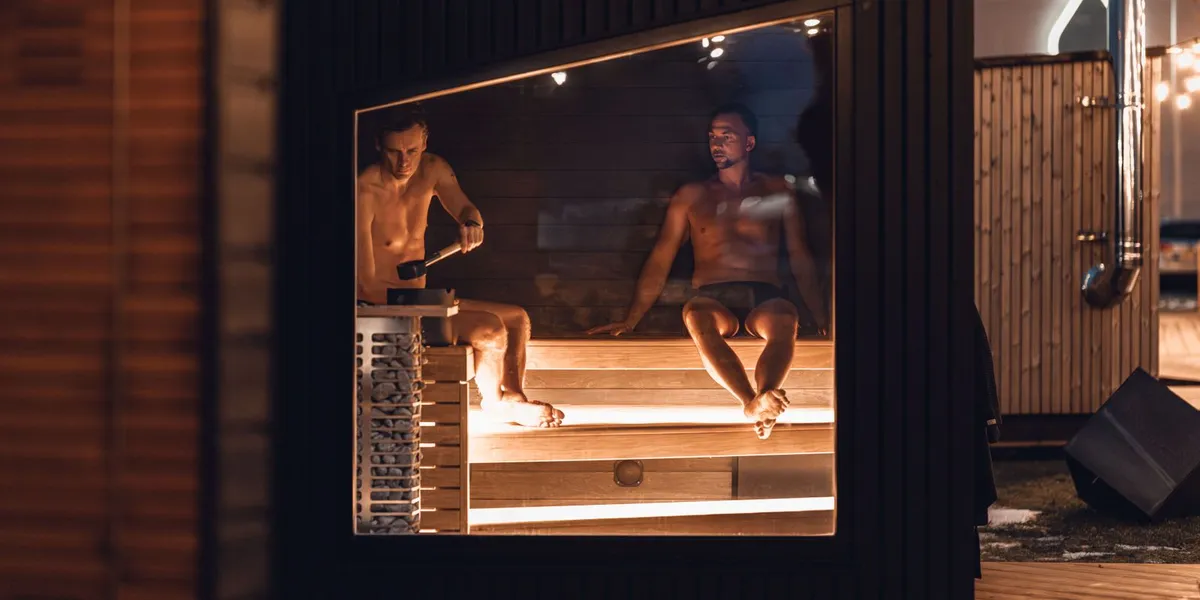
The heater and the insulation get the attention, but a surprising amount of a sauna’s performance and lifespan comes down to small parts: the door, the weatherstripping and the glazing seals. Get them wrong and a well-built sauna leaks heat and traps moisture; get them right and it stays efficient and dry for decades.
The door
A sauna door has a few firm rules:
- It should open outward, so it can never be blocked from inside and always opens freely — a safety essential — and so it does not sweep the benches.
- It should open with a light push and use a roller catch or simple ball latch, never a lock or a mechanism that could jam in heat.
- Its fit matters as much as its build: a door that seats cleanly into a well-made frame loses far less heat than one that sits proud.
A glazed door adds light and openness and is very popular; it uses toughened safety glass and carries the same efficiency trade-off as any glazing.
Weatherstripping and the frame
Even a small continuous gap around a door loses heat every single session and lets cold draughts in at the feet. Weatherstripping — a compressible seal around the door or frame — closes that gap, and a well-fitted frame keeps it closed over time. In a cold climate this unglamorous detail pays for itself in comfort and running cost.
Glazing seals and thermal breaks
Where a sauna has glazing — a window, a door, a full wall — two details protect it:
- Seals around the glass keep the warm, humid interior from driving moisture into the frame and wall. They take a beating from heat, humidity and the temperature swing, so they are inspected and maintained.
- Thermal breaks — a non-conductive separation in the frame — stop heat and cold conducting straight through. Without them, frames go cold and drip with condensation, staining timber and, over time, causing damage. The archive’s glazed profiles all note thermal-break detailing for exactly this reason.
Maintenance
Once a year, run a hand around the door and along the glazing when the sauna is cold: feel for draughts, look for perished weatherstripping and check the glazing seals for gaps or splitting. Clean the seals, re-fit or replace weatherstripping, and re-seal glazing as needed. It takes minutes and preserves both the efficiency you designed in and the structure you built. As always, follow the manufacturer’s guidance for any door and glazing units.
Frequently asked questions
Which way should a sauna door open?
Outward, so it can never be blocked from inside and always opens freely in an emergency, and so it does not sweep the benches. It should open with a light push and no latch that can jam.
Should a sauna door have glass?
It can — a glazed door adds light and a sense of openness, at some heat loss. Toughened safety glass is used, and the same trade-off applies as any glazing.
What keeps the heat from leaking around the door?
Weatherstripping and a well-fitted frame. Even a small continuous gap around a door loses heat every session, so the seal and the fit matter as much as the insulation.
What is a thermal break?
A non-conductive separation in a frame that stops heat (and cold) travelling straight through it. It keeps glazing frames from going cold and dripping with condensation.
How are glazing seals maintained?
Inspect them yearly for perishing or gaps, keep them clean, and re-seal or replace as needed — especially important given the heat, humidity and temperature swings a sauna sees.
Added to the catalogue on . Catalogue Editorial Team at Outdoor Sauna Index.