Guide
How Glass Affects Heating Volume
A glazed wall does not just add a view — it adds heat loss and effectively enlarges the volume the heater must serve. This guide explains the trade-off and how to design around it.
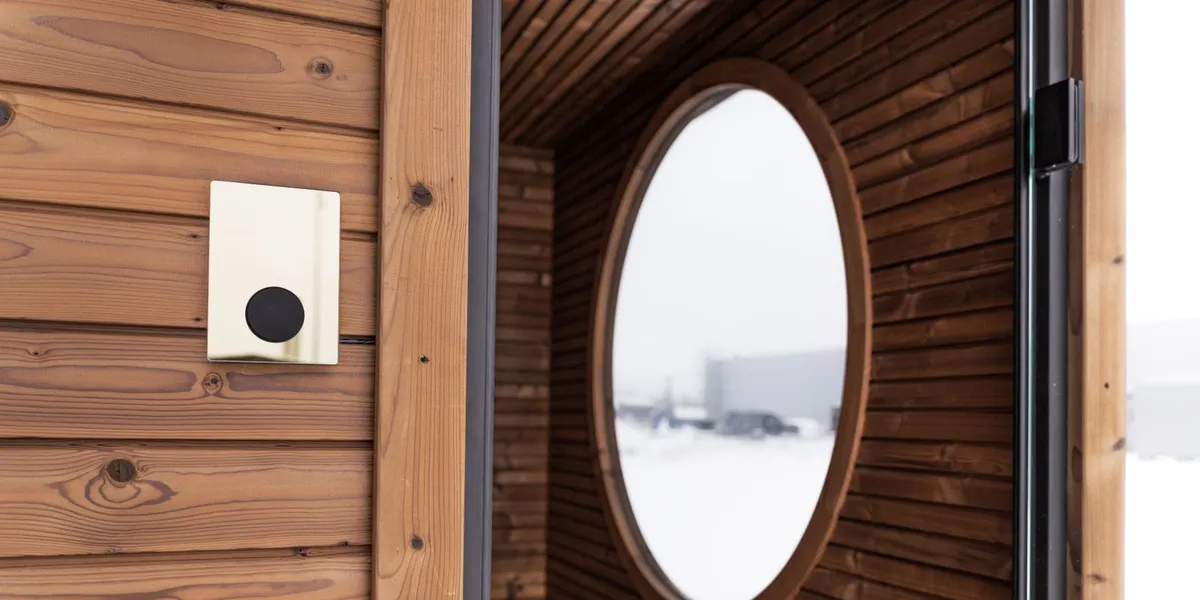
If you take one idea from the archive, let it be this: glazing is the biggest single lever on a sauna’s heater size and warm-up time. Everything else — capacity, style, cladding — matters less to the thermal outcome than how much glass you specify.
Why glass behaves so differently
An insulated timber wall is a barrier to heat. A glazed wall, even a good one, is a comparatively leaky surface: it loses several times more heat per unit area than the insulated wall it replaces. In heating terms, a large glazed wall behaves as though the room were bigger than it is — the heater has to make up for the continuous loss through the glass as well as heat the air.
That is why the archive’s minimally glazed, high-performance profiles sit at the bottom of their heater range, while the panoramic glass profiles sit at the top or beyond, for the same floor area.
The trade-off you are actually making
A glazed sauna buys you light and outlook — a genuine connection to a garden, forest or lake — in exchange for:
- a larger heater and a bigger electrical supply,
- a longer warm-up, especially in deep cold,
- more condensation and cleaning, and
- a more demanding, usually professional, build with structural glazing and thermal breaks.
None of this makes glass a mistake. It makes it a deliberate choice to be sized and detailed for, rather than added casually to an otherwise efficient box.
Designing around the glass
- Insulate everything that isn’t glass to a high standard. The opaque walls and roof have to compensate for the glazed elevation.
- Specify better glazing. Higher-performance insulated units lose less heat and condense less — usually worth it in a cold climate.
- Up-size ventilation. Balanced, high-capacity ventilation manages the humidity and condensation a large glazed surface produces.
- Mind the frames. Thermal breaks stop the frames going cold and dripping.
- Orient with care. Face the glass at the view and away from harsh sun and neighbours; a west-facing glass wall can overheat on a summer evening.
Reading it in the catalogue
Each profile lists a glazing level (minimal → panoramic) alongside its heater class and internal volume. Comparing a solid cube, a glass-front cube and a glass pavilion side by side is the clearest way to see the cost of glass: same idea, rising glazing, rising heater class and warm-up. Use the comparison tool to lay them out and decide where, on that spectrum, your own project belongs.
Frequently asked questions
How much does glazing raise the heater size?
There is no single figure, but a heavily glazed room typically moves a class or more above an equivalent solid-walled room, because glass loses several times more heat than an insulated wall.
Does a glass sauna work in a Canadian winter?
Yes, when the opaque walls and roof are well insulated and the glazing is high quality, but it is less efficient and slower to warm than a solid room, and is usually a professional build.
Single, double or triple glazing?
Higher-specification insulated glazing loses less heat and condenses less. In cold climates the extra performance is usually worth it for comfort and running cost.
Where should the glazing face?
Toward the best outlook and away from harsh afternoon sun and overlooking. Orientation affects both the experience and summer overheating.
How is condensation on the glass managed?
With high-capacity, balanced ventilation, good thermal breaks at the frames, and glazing specified for the humidity and temperature swing.
Added to the catalogue on . Catalogue Editorial Team at Outdoor Sauna Index.