Guide
How Catalogue Profiles Are Created
Every profile follows the same method: a defined archetype, a consistent field set, and approximate reference ranges rather than engineered values. This guide explains that method and its honest limits.
Outdoor Sauna Index is a design archive, and its credibility rests on a transparent method. This guide explains how each profile is made, so you can trust what the numbers do — and do not — mean.
A profile is an archetype, not a product
Each entry is a reference configuration: a typical architectural and construction archetype — a compact cedar cabin, a wood-fired barrel, a glass pavilion — documented consistently. It is explicitly not a claim that a specific company built a specific structure. Where a profile is more speculative, it is labelled a Concept Profile or Construction Archetype rather than a Reference Configuration.
One field set, applied to everything
Every profile is described with the same fields: identity, classification, capacity, heating, dimensions, materials, construction, features, climate suitability and editorial notes. This consistency is what makes the catalogue useful — you can place any two profiles side by side and compare them on equal terms, because they answer the same questions.
The numbers are reference ranges
Footprints, internal volumes, ceiling heights and heater classes are approximate reference ranges, derived from transparent relationships:
- volume follows from footprint and ceiling height,
- heater class follows from volume, glazing and insulation,
- capacity follows from bench layout,
- foundation options follow from structure weight and climate.
They are planning figures to compare and reason with, not measurements of a real building and not engineered values. This is stated on every profile and in the standard planning disclaimer.
What the archive deliberately avoids
To stay honest and useful, the project does not:
- show prices, ratings, reviews or availability,
- claim any profile is a real, warranted, built product,
- invent certifications, code figures, fire clearances or warm-up guarantees,
- attribute designs to fictional architects or engineers, or
- use a rolling “last updated” date to imply freshness.
Profiles carry only the date they were added to the catalogue.
Images
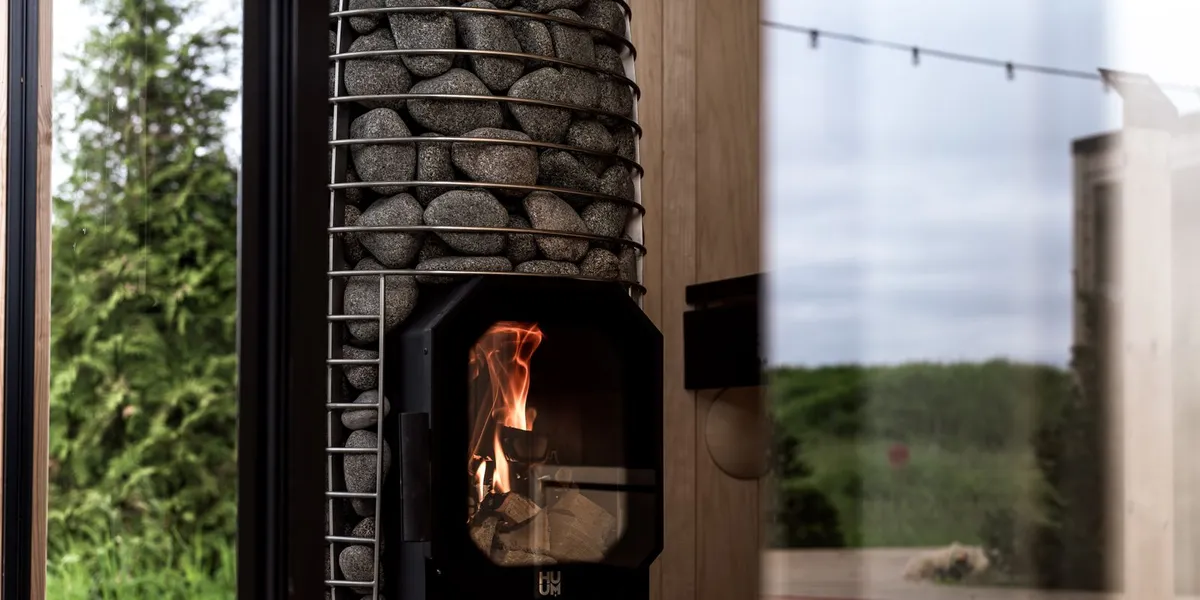
Each profile uses a single reference photograph to illustrate the general sauna type and visual direction. It is licensed for reuse and attributed on the image credits page, and it is not a photograph of the specific configuration described — the caption says so plainly.
Why the method matters to you
Because the profiles share a method, the archive is a genuine planning and comparison tool, not a gallery of marketing claims. Read a profile knowing exactly what kind of information it is: a consistent, honest, approximate starting point that you take to a qualified professional to make real.
Frequently asked questions
Are the profiles real, built saunas?
No. Each is a reference configuration — a typical architectural and construction archetype for planning and comparison — not a claim about a specific built structure.
Where do the numbers come from?
From consistent, transparent relationships between volume, glazing, insulation and capacity — reference ranges, not measurements of a real building.
Why no prices or ratings?
The archive is a reference, not a shop or a review site. Prices, ratings and reviews would imply data and commerce that the project deliberately avoids.
Can two profiles be compared fairly?
Yes — that is the point of the shared field set. Differences in footprint, heater class or insulation are directly comparable across profiles.
How often are profiles updated?
Profiles show the date they were added, not a rolling "updated" date. New profiles are added over time; existing figures remain reference ranges.
Added to the catalogue on . Catalogue Editorial Team at Outdoor Sauna Index.