Guide
Choosing and Stacking Sauna Stones
The stones are where the steam comes from. This guide explains stone types, how stone capacity trades warm-up against steam quality, and how to stack and look after them.
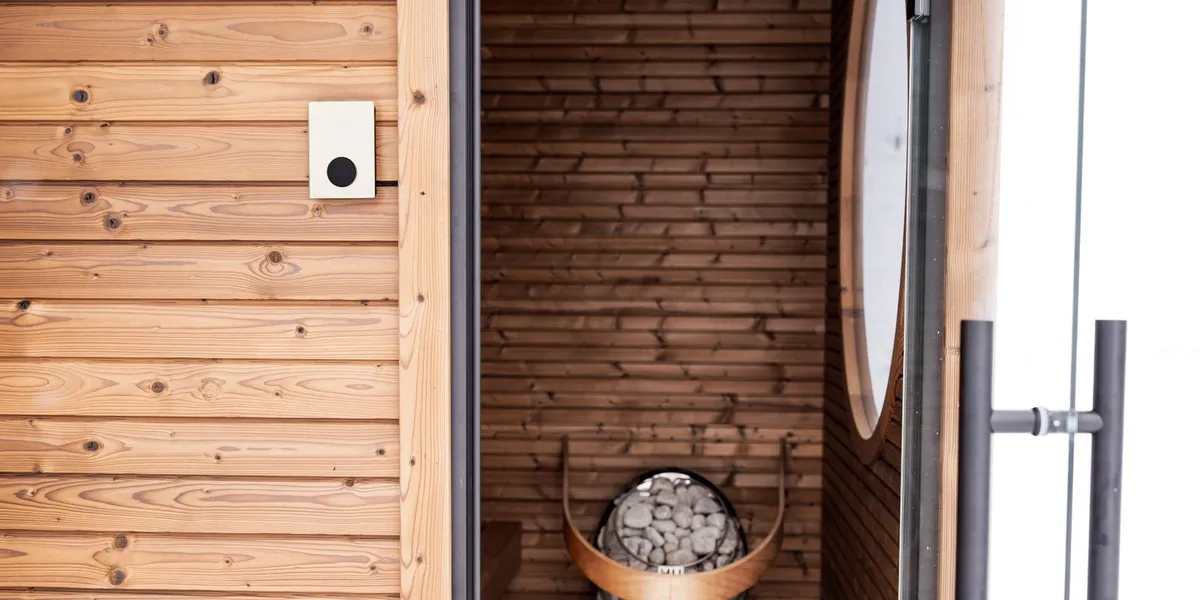
Ask what makes a sauna a sauna rather than a hot room, and the honest answer is the stones. They store the heat and, when water is thrown on them, release the soft burst of steam — löyly — that defines the experience. Choosing and caring for them is worth understanding.
What the stones do
The heater or stove warms a pile of stones. The stones store that heat and radiate it steadily into the room, evening out the temperature. When you ladle water onto them, they flash it to steam, sending a wave of moist heat across the bathers. Without stones — or with too few — you get harsh, dry air and a poor, short-lived steam.
Which stones to use
Use only stones sold or specified for sauna use. These are dense, heat-tolerant types (such as certain volcanic and metamorphic rocks) chosen to survive repeated heating and sudden cooling by water without cracking. Do not use random landscape or river stones: trapped moisture can make them shatter when heated, which is dangerous. Follow the heater or stove manufacturer’s recommendation on stone type and size.
Stone capacity: the key trade-off
The archive lists a stone-capacity preference for each profile because it shapes the whole experience:
- More stone (high capacity) stores more heat, gives a softer, longer-lasting steam, and holds temperature well — at the cost of a longer warm-up. Wood stoves and larger rooms favour this.
- Less stone (low capacity) heats fast and gives a sharper, shorter steam, suiting small, quick-to-warm rooms.
Neither is better; it is a choice between speed and the quality of the steam.
Stacking them
Stack stones loosely, largest at the bottom, so air and heat can circulate between them and steam can escape freely. Packing them tightly chokes the airflow and dulls the steam. Always follow the manufacturer’s guidance on how much stone the heater takes and how to arrange it around the elements.
Maintenance
Stones are consumables. Over time they crack, crumble and shed dust, which restricts airflow and weakens the steam. Once or twice a year, take them out, discard broken pieces, clear the dust, and re-stack — replacing stones as they degrade. Fresh, well-stacked stones are one of the cheapest ways to keep a sauna bathing beautifully.
Frequently asked questions
What do sauna stones actually do?
They store the heater's or stove's heat and release it — and produce the burst of steam (löyly) when water is thrown on them. They are what turns dry heat into a proper sauna.
Can I use any stones?
No. Use stones sold or specified for saunas — dense, heat-tolerant types that withstand repeated heating and water without cracking. Ordinary landscape or river stones can shatter dangerously.
Does more stone mean better steam?
More stone stores more heat and gives a softer, longer-lasting steam, but takes longer to warm up. Less stone heats fast and gives a sharper, shorter steam. It is a comfort trade-off.
How should stones be stacked?
Loosely, so air and heat can move between them, following the heater manufacturer's guidance — not packed tight, which restricts airflow and the steam.
Do stones need replacing?
Yes, periodically. They degrade with heat cycling, crack and produce dust; inspect them, remove broken pieces and replace as the manufacturer advises.
Added to the catalogue on . Catalogue Editorial Team at Outdoor Sauna Index.